If you’ve dipped your toes into the world of crypto, you’ve probably heard the term “Hardware Wallet” and immediately pictured a digital leather pouch where your coins sit.
Here’s the first thing you need to know: A hardware wallet is not a wallet. It’s a lock.
If you’re worried about hackers, “stolen” computers, or losing your life savings because of a virus on your phone, this simple guide is for you. Let’s break down what these devices actually do (and what they definitely don’t do).
It’s a Lock, Not a Pouch
Think of your crypto as being inside a high-security vault at a bank. The vault is the Blockchain (the internet ledger where all crypto lives).
- Your Phone/PC App: This is like the bank’s front door. It’s convenient, but anyone with a stolen key (or a hacked computer) can walk right in.
- The Hardware Wallet: This is the physical lock on your specific safe-deposit box inside that vault.
Even if a thief steals your laptop or hacks into your mobile app, they are stuck at the “front door.” To actually move any money, they need to physically press a button on that little device in your drawer. It’s like having a physical 2FA (Two-Factor Authentication) for your entire digital fortune.
What a Hardware Wallet is NOT
To keep things simple, let’s clear up some common myths. A hardware wallet is NOT:
- An Exchange: You don’t use it to “buy” or “trade” stocks and coins like you do on Coinbase or Binance. It doesn’t have a “buy” button connected to your bank.
- A Storage Unit: Your coins are never actually “inside” the device. If you throw the device in the ocean, your coins are still on the blockchain. The device is just the only “key” that can move them.
- A USB Drive: You can’t put your photos or Word documents on it. It only does one job: protecting your digital signature.
Why You Need One (The “Hacker-Proof” Shield)
Most people keep their crypto on a mobile app or a browser extension. This is what we call a “Hot Wallet” because it’s always connected to the internet.
The Risk: If you accidentally click a bad link and a hacker gets into your PC, they can “see” your password as you type it. They can then drain your account in seconds.
The Solution: When you use a hardware wallet, your “password” (private key) never actually enters your computer.
- You plug the device in.
- The computer says, “Hey, I want to send 1 Bitcoin.”
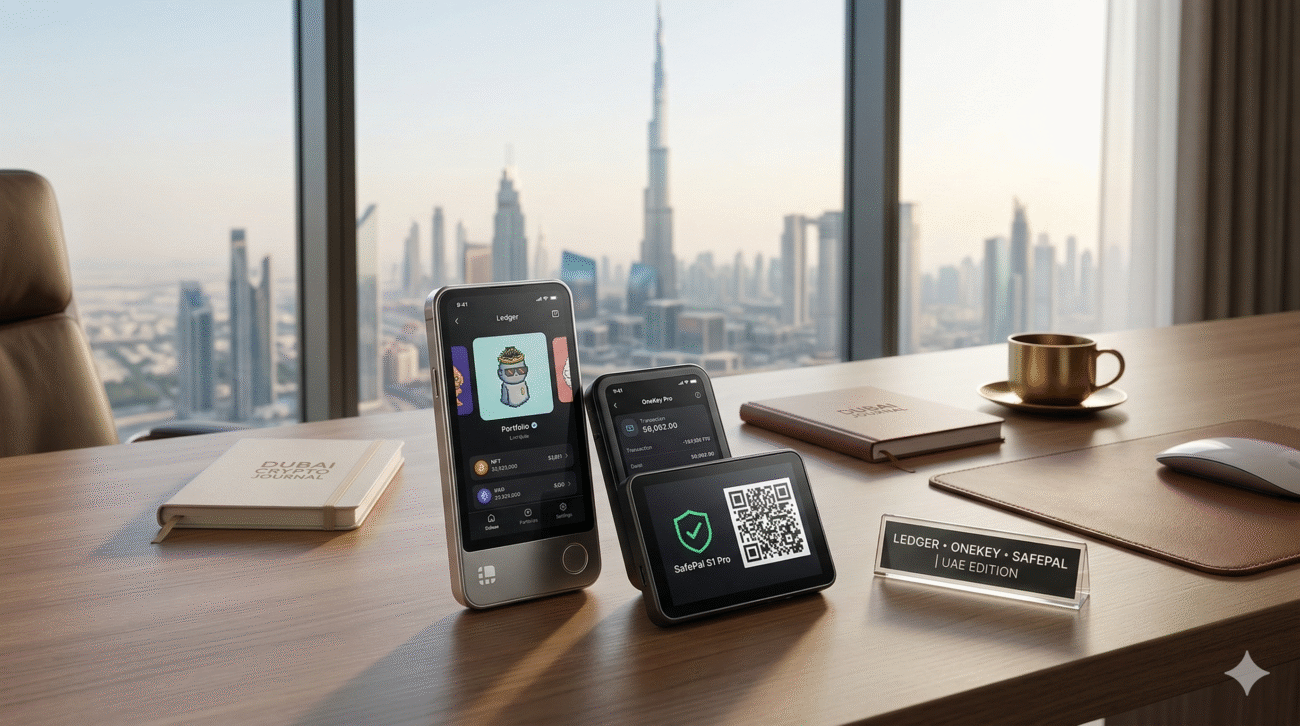
- The device shows a message on its tiny screen: “Confirm sending 1 Bitcoin?”
- Nothing happens until you physically click the button on the device.
A hacker in Russia or a thief who stole your phone can’t click a physical button in your living room.
The Bottom Line: Peace of Mind
Think of a hardware wallet as the second password that a hacker can never guess and a virus can never find. It is the ultimate “safety switch.”
If your computer dies, or your phone is stolen, you don’t panic. You simply buy a new device, enter your recovery phrase (a list of 12-24 words), and your “lock” is back in your hands.
Your assets stay safe because the “key” was never online to begin with.